
How Does a Jet Pump Work?
The operating principle behind jet pumps and eductors — and why it makes them uniquely reliable for industrial fluid handling.
The Principle
Fluid Entrainment and the Venturi Effect
A jet pump — also called an eductor — operates on a simple but powerful principle: when a fluid is forced through a converging nozzle, its velocity increases and its pressure drops (the Venturi effect). This low-pressure zone entrains a second fluid from the surrounding environment.
The two fluids mix in a chamber downstream of the nozzle, and the combined stream then passes through a diverging diffuser where velocity is converted back to pressure. The result is a pump that moves fluid using only the energy of a pressurized motive stream — with no rotating parts, no electricity at the pump location, and no mechanical components to wear out.
This principle was first described by Giovanni Venturi in 1797 and has been applied in industrial fluid handling for well over a century. Northeast Controls has been engineering and supplying jet pumps and eductors based on this principle since 1937.
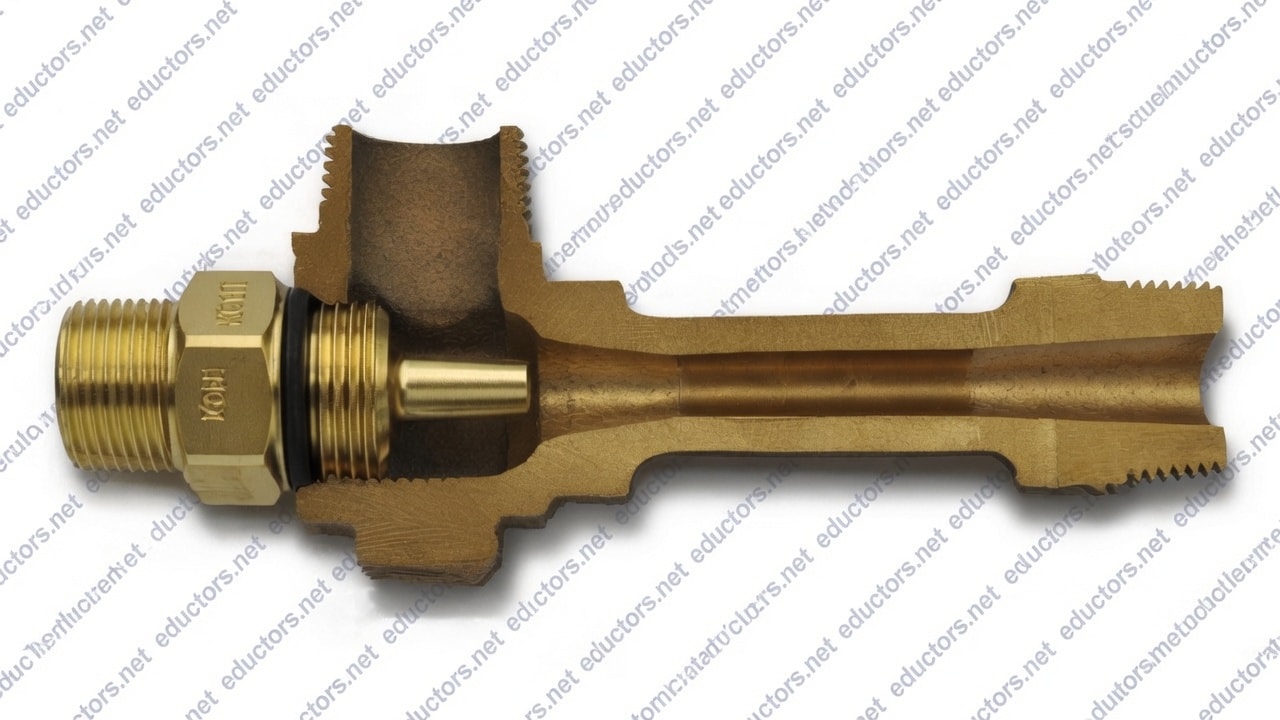
Cutaway view showing the nozzle, mixing chamber, and diffuser
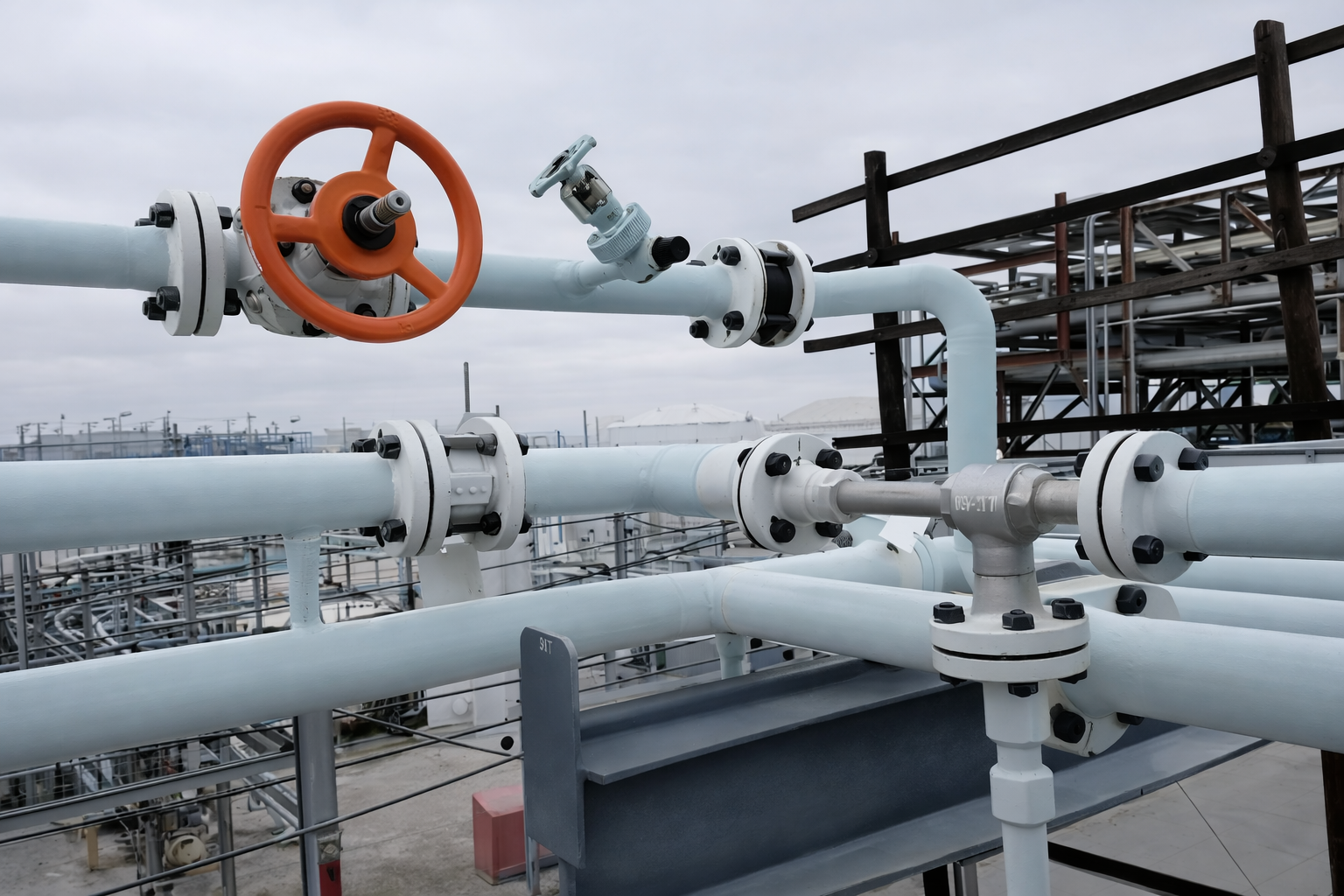
Typical jet pump installation in an industrial application
Anatomy
Three Key Components
Converging Nozzle
The motive fluid enters through the nozzle, which accelerates it to high velocity. This velocity increase causes a corresponding pressure drop — creating the suction zone that entrains the secondary fluid.
Mixing Chamber
The high-velocity motive jet entrains the suction fluid in the mixing chamber. Momentum is transferred from the motive stream to the suction fluid, and the two streams begin to mix.
Diffuser
The combined stream passes through the diverging diffuser, where velocity decreases and pressure increases. The discharge pressure is higher than the suction pressure — the pump has done work.
The Advantage
Why Zero Moving Parts Matters
No Mechanical Failure Modes
Conventional pumps fail because bearings wear, seals leak, impellers erode, and shafts break. Eductors have none of these components — and none of these failure modes.
No Maintenance Schedule
No lubrication intervals, no seal inspections, no bearing replacements. An eductor installed correctly will operate indefinitely with no scheduled maintenance.
Handles Difficult Fluids
Corrosive, abrasive, hot, viscous, or particulate-laden fluids that destroy mechanical pumps are handled routinely by eductors — because there's nothing to corrode, erode, or clog.
Engineering
Proper Sizing is Critical
Unlike centrifugal pumps, jet pumps cannot be throttled or adjusted in the field. They must be sized correctly for the specific motive pressure, suction conditions, discharge backpressure, and fluid properties of the application. An undersized eductor won't achieve the required flow or vacuum; an oversized one wastes motive fluid.
Northeast Controls engineers every eductor to your specific process conditions. We use proven sizing methods based on motive pressure, suction lift or vacuum, discharge backpressure, NPSH, and fluid properties — ensuring predictable, reliable performance from day one.
If you're not sure what you need, contact us with your process conditions and we'll recommend the right product and size.
Talk to an EngineerExplore Products
Our Eductor Product Lines
Ready to Put Eductors to Work?
Our engineers will size the right eductor for your application. Contact us with your process conditions and we'll take it from there.
What's Next?
Continue Your Research
Sizing Calculator
Go deeper — estimate exact flow rates and pressures.
How It Works
Learn the engineering principles behind jet pumps and eductors.
Request a Quote
Ready to order? Submit your process conditions.
Prefer to talk it through? Call 1+201-419-6111